

News & Events
Clinical Study: Finite Element Analysis of TVT and TVT-O at Different Positions for Treating Stress Urinary Incontinence in Elderly Women
Objective:
To simulate common sling procedures for stress urinary incontinence (SUI) in elderly women—retropubic tension-free vaginal tape (TVT) and transobturator tension-free vaginal tape (TVT-O)—using finite element analysis, and to evaluate their therapeutic effects at different positions along the urethra.
Methods:
A pelvic geometric model was constructed based on magnetic resonance imaging (MRI) scans of a woman without pelvic floor disorders. Age-related weakening of vaginal tissue was modeled as reduced tissue stiffness. Abdominal pressure was applied to simulate the Valsalva maneuver. TVT and TVT-O were placed at the proximal, mid-distal, and distal urethra, and mechanical data were obtained.
p style=”text-indent: 2em;”> Results:
Sling placement at the proximal urethra resulted in α-angle and bladder neck displacement values below normal. The “funneling” phenomenon disappeared when the sling was placed at the proximal and mid-distal urethra but persisted when placed at the distal urethra. The magnitude of pressure between the sling and urethra at different positions followed the order: proximal > mid-distal > distal.
Conclusion:
p style=”text-indent: 2em;”>
Sling placement at the proximal urethra (30%) tends to cause over-tightening of the urethra and postoperative complications. Sling placement at the distal urethra (80%) results in poor therapeutic effect. Sling placement at the mid-distal urethra (60%) provides good therapeutic effect and low rates of postoperative complications. TVT placed at the mid-distal urethra should be the first-choice surgical method for SUI in elderly women.
Stress urinary incontinence (SUI) is a common urinary system disorder in middle-aged and elderly women, characterized by involuntary urine leakage from the urethral meatus during episodes of increased abdominal pressure, such as coughing, sneezing, physical exertion, or exercise. SUI restricts daily activities and significantly impairs the quality of life in affected women. The incidence of this condition is high among adult women in China, particularly in elderly women, making it a disease that severely affects the quality of life of older women.
Although numerous clinical trials have investigated sling implantation for the treatment of SUI in elderly women, the results are often subjective and fail to objectively represent the interactions among pelvic organs. Medical imaging techniques, such as perineal ultrasound, have been used to study this topic. However, they only provide two-dimensional images and lack key biomechanical information, such as the interaction between the sling and surrounding tissues, which precludes quantitative analyses of sling performance. Finite element models based on female pelvic anatomy can provide effective tools for quantitative analysis of female pelvic floor dysfunction. Therefore, we aim to establish a finite element model of female pelvic organs from magnetic resonance images, observe the dynamic changes of the urethra, bladder neck, and sling under abdominal pressure, and investigate the changes in pelvic organ status and the urethra-sling interaction after incontinence surgery. This will allow us to explore the influence of sling position on treatment outcomes and predict potential risk factors (urinary retention and pain), providing guidance for clinical sling implantation surgery for SUI in elderly women to select the most appropriate surgical method.
Materials and Methods
01 Data Source
The modeling data were obtained from a volunteer recruited at Tianjin First Central Hospital. The volunteer was a 29-year-old woman with a BMI of 22, a history of one pregnancy, and no pelvic floor disorders. She was able to perform the Valsalva maneuver after training. Her static MRI images were clear and complete, and the midsagittal dynamic MRI images were complete without obvious artifacts.
02 Research Methods
1. Finite Element Model
Organ contours were delineated on each slice based on the patient’s T2-weighted MRI images. A three-dimensional finite element model of the urinary system, including the bladder, urethra, vagina, uterus, pubourethral ligament, rectum, levator ani muscle, and pelvis, was reconstructed in MIMICS 19.0 (Materialize, Leuven, Belgium) (Figure 1a-c). The upper one-third of the urethral wall was modeled as apposed anteriorly and posteriorly to facilitate the study of urethral “funneling” caused by incontinence. All models were exported in binary STL format to the reverse engineering software Geomagic Studio 14.0 (Materialize, Leuven, Belgium) for smoothing and other processing (Figure 1d). They were then imported into the finite element analysis software ANSYS 18.0 (ANSYS Inc., Canonsburg, USA) for material property definition, meshing, and boundary condition setting (Figure 1e-f).
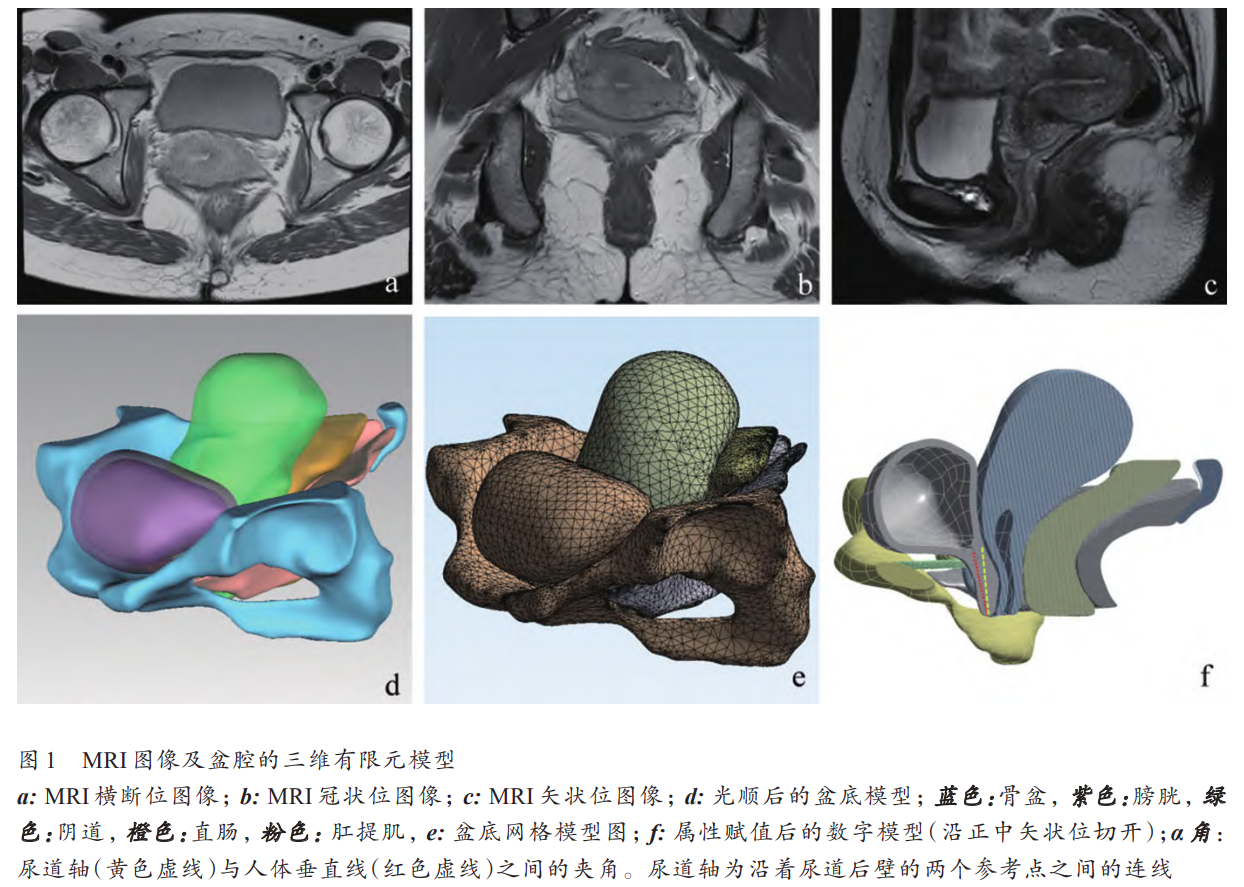
2. Material Properties
According to the literature, the material properties of pelvic floor soft tissues can be considered linearly elastic when the load is less than 70% of the maximum stress. Therefore, all models were defined as linear elastic materials. Material parameters were obtained from the literature: bladder (Poisson’s ratio 0.49, Young’s modulus 22 kPa); vagina (Poisson’s ratio 0.3, Young’s modulus 1.5 MPa); pubourethral ligament (Poisson’s ratio 0.3, Young’s modulus 5 MPa); rectum (Poisson’s ratio 0.45, Young’s modulus 0.1 MPa); levator ani muscle (Poisson’s ratio 0.3, Young’s modulus 2.4 MPa); sling (Poisson’s ratio 0.3, Young’s modulus 15 MPa). The sling width was 10 mm (0.42 in). Because the displacement of the pelvis under abdominal pressure is negligible compared to that of the organs, the pelvis was modeled as a rigid structure.
3. Boundary Conditions
Constraints were set with reference to the pelvis. The displacement of the pelvis was set to zero in all directions. Fixed constraints were applied to structures directly connected to the pelvis, including the pubourethral ligament, the arcus tendineus of the levator ani muscle, and the lower one-third of the urethra. Considering that this study focuses on SUI in elderly women without other pelvic floor disorders, constraints were applied at the connections between the lateral aspects of the vagina and the tendinous arch of the pelvic fascia, as well as at the connection between the rectum and the perineal body. Contact between organs was defined using the “Frictionless” contact algorithm, as suggested in the literature for model simplification. The contact between the organs and the sling was defined using the “Frictional” algorithm, with a friction coefficient of 0.2.
4. Simulation Protocol
This experiment simulated the movement of organs during the Valsalva maneuver and the changes in organ movement after sling implantation under pathological conditions. Intravesical pressure under abdominal pressure was used as the loading standard. According to previous studies, the intravesical pressure during the Valsalva maneuver is 5 kPa (39.7 mmHg). Therefore, pressure was applied directly to the inner wall of the bladder in the direction consistent with that reported by DeLancey in the literature. To control variables, the same abdominal pressure was used for all models.
(1) Construction of the incontinence model: Abdominal pressure was applied to all tissues and organs under normal conditions. The urethral α-angle, bladder neck displacement, and the formation of urethral funneling were observed and compared with MRI images for model validation. Subsequently, Young’s modulus of the vagina was reduced by 50% and 90% to simulate age-related weakening of the vaginal wall in elderly women, and the changes in each parameter were observed.
(2) Simulation of sling procedures: In the incontinence model, slings (TVT and TVT-O) were placed at the proximal (30%), mid-distal (60%), and distal (80%) urethra (Figure 2). Improvements in various indicators were observed. The pressure between each sling and the urethra was compared to predict the occurrence of complications and to select the most appropriate surgical method for sling implantation in elderly women with SUI.
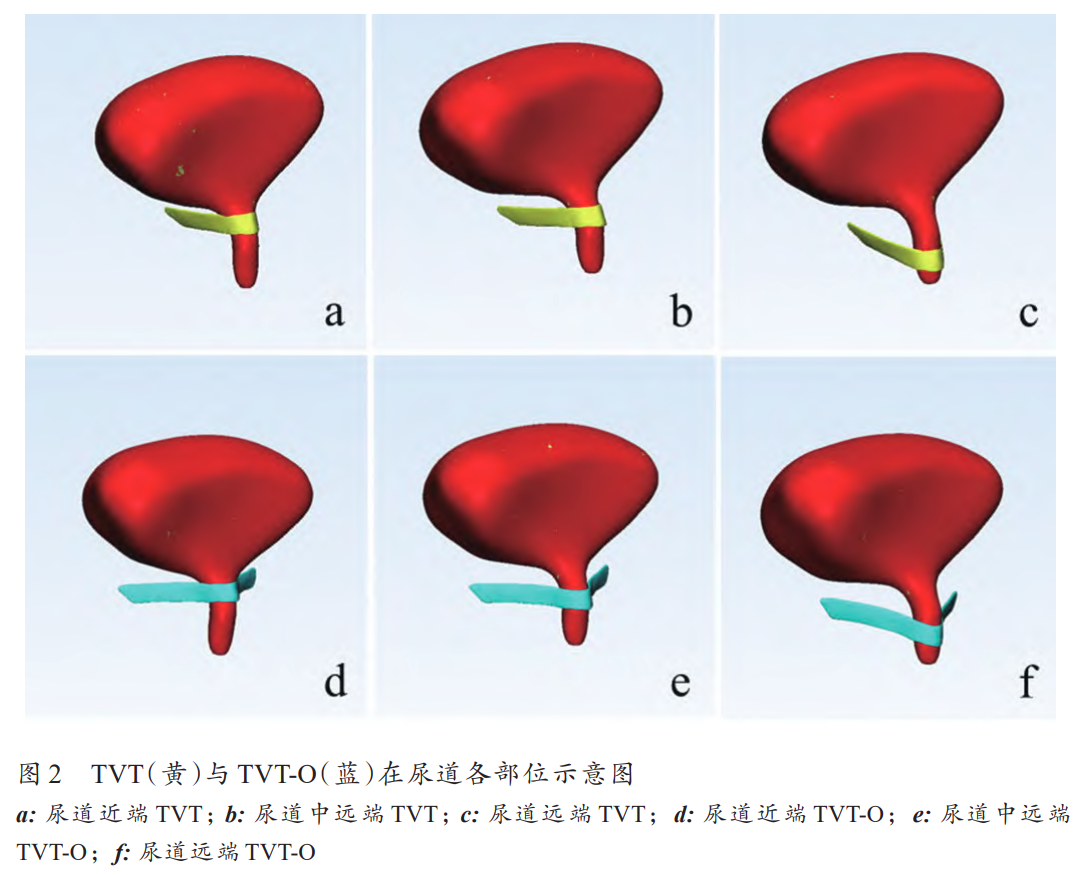
Results
Table 1 shows the α-angles obtained from the volunteer’s dynamic MRI images and the finite element model at rest and at maximal Valsalva. According to the literature, the α-angle can be used to verify the reliability and authenticity of the finite element model. Therefore, we validated the finite element model by comparing the urethral α-angle from the finite element model with that from dynamic MRI during the Valsalva maneuver; the trends were consistent.
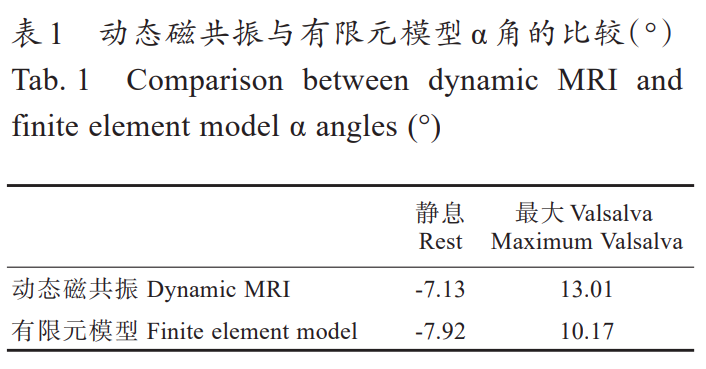
Table 2 summarizes the changes in bladder and urethral parameters under different degrees of vaginal degeneration. As the vaginal tissue progressively weakened and Young’s modulus decreased, the urethral α-angle and bladder neck displacement gradually increased. Under normal conditions, the urethral α-angle was 10.17°. As Young’s modulus of the vagina decreased, the α-angle increased to 15.53°, and bladder neck displacement increased from 5.97 mm to 7.18 mm. When Young’s modulus of the vaginal tissue was reduced by 50%, urethral funneling (11.09°) was observed (Figure 3b). When reduced by 90%, a larger funnel (20.94°) was formed. Therefore, the model with 90% vaginal tissue degeneration was selected for subsequent sling studies.
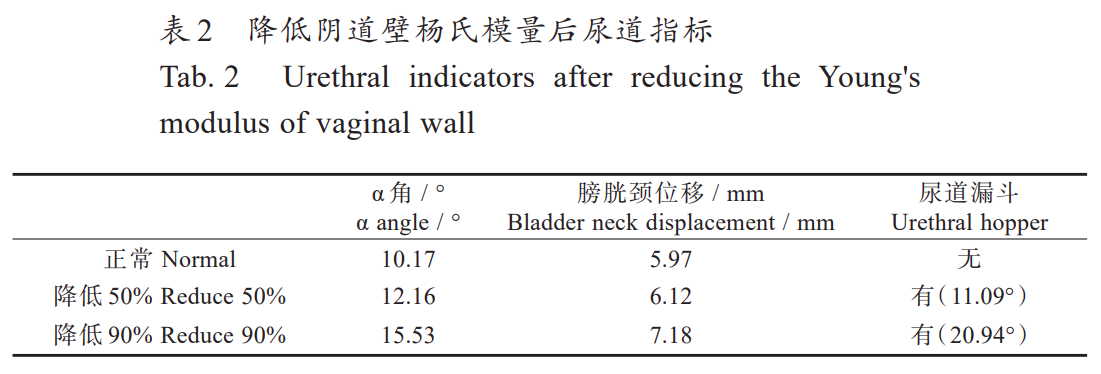
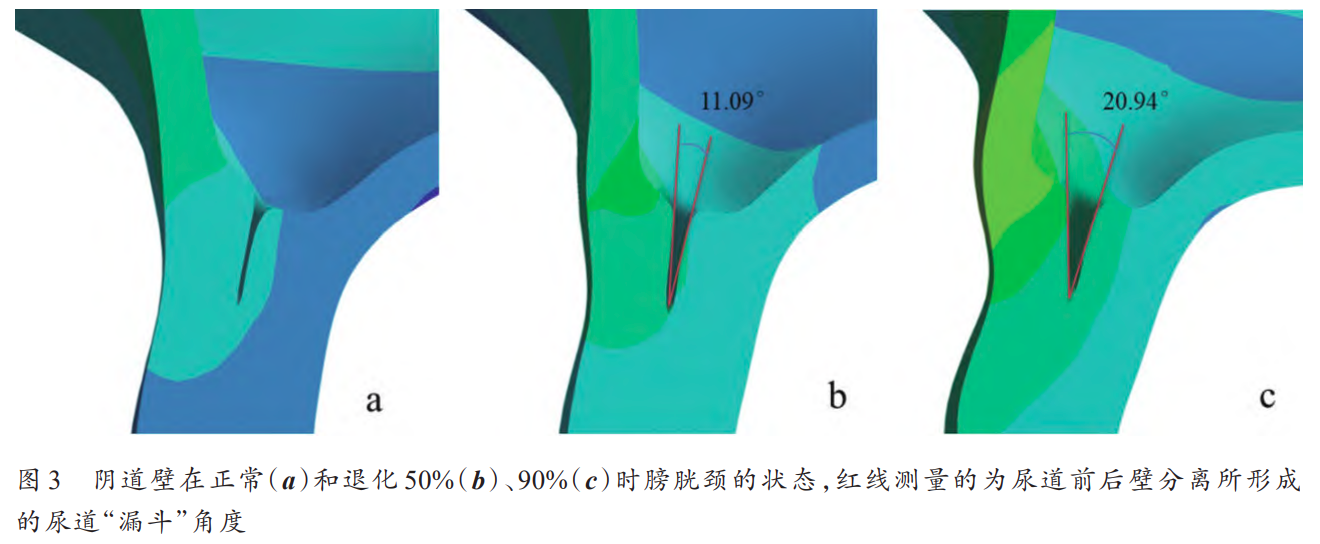
Table 3 summarizes the simulation results of the subsequent sling procedures. Both TVT and TVT-O improved urethral conditions, with varying degrees of reduction in α-angle and bladder neck displacement. When the sling was placed at the proximal urethra, the α-angle and bladder neck displacement values were even smaller than those under normal vaginal conditions. When the sling was placed at the mid-distal urethra, the α-angle and bladder neck displacement were closest to the values measured under normal vaginal conditions. Figure 4 shows midsagittal displacement cloud maps of pelvic organs after sling placement. Sling placement at the proximal and mid-distal urethra eliminated urethral funneling, whereas placement at the distal urethra did not.
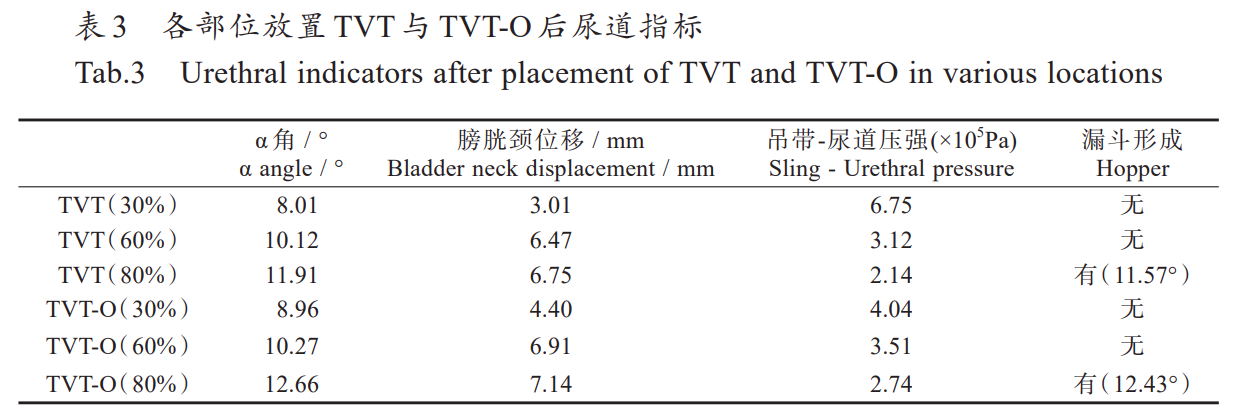
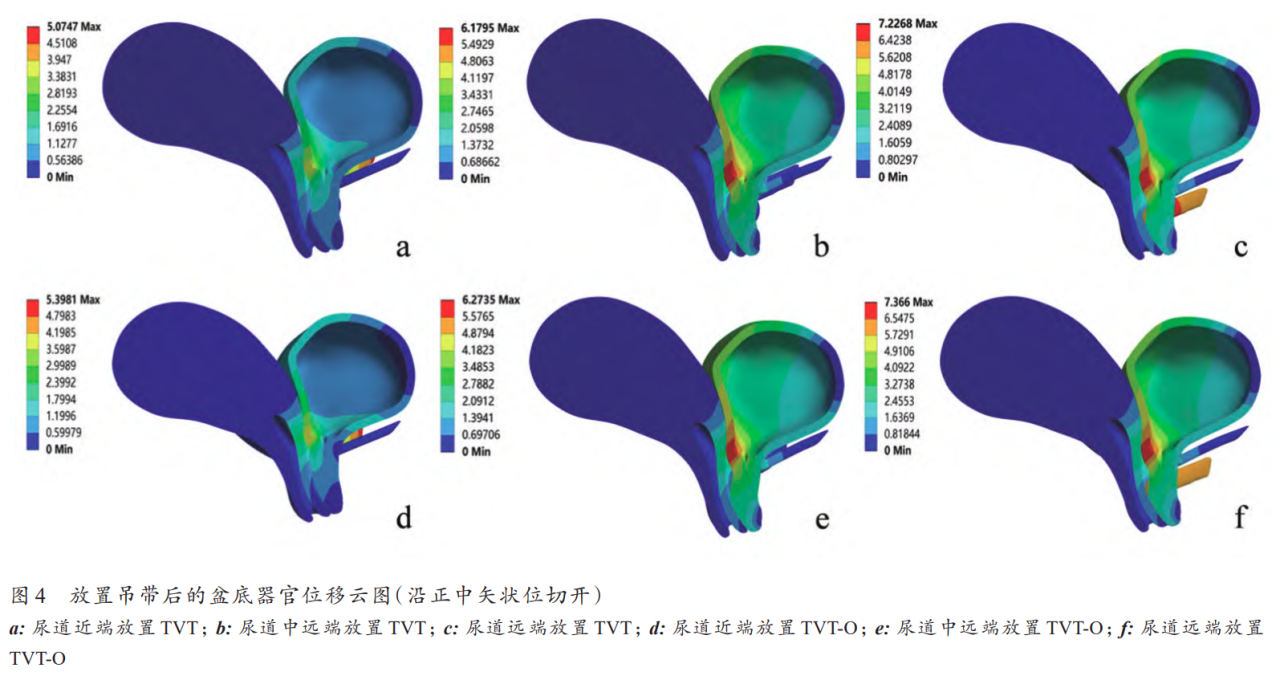
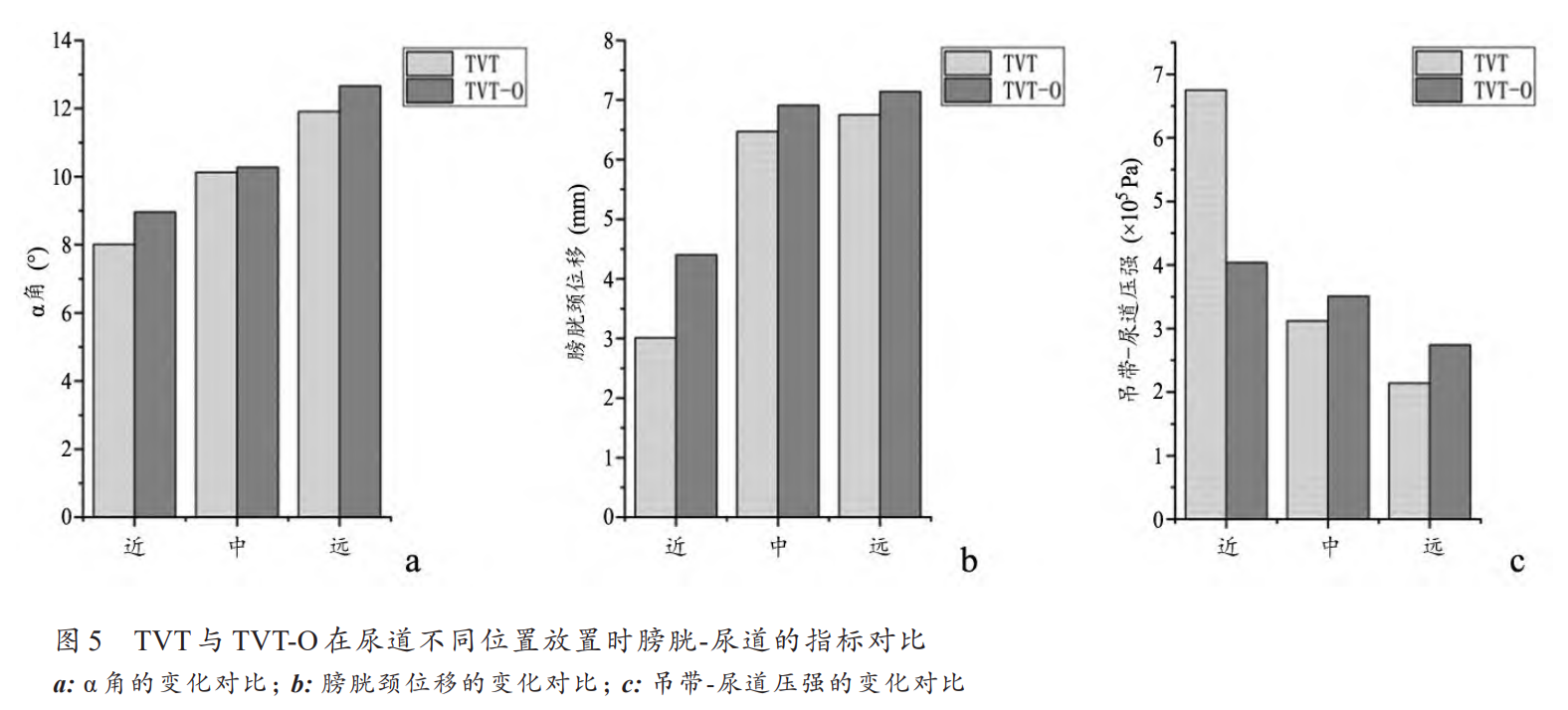
Figure 5 compares the changes in bladder and urethral parameters after TVT and TVT-O placement at different positions. (a) Comparison of α-angle: after sling placement, the order of urethral α-angle for both TVT and TVT-O was proximal < mid-distal < distal, with little difference between the two sling types at each position. (b) Comparison of bladder neck displacement: for both sling types, bladder neck displacement was similar at the mid-distal and distal urethra, but at the proximal urethra, it was significantly smaller than at the mid-distal and distal positions, and also smaller than the bladder neck displacement under normal vaginal conditions. (c) Comparison of pressure between the sling and the urethra: the order was proximal > mid-distal > distal. At the mid-distal and distal urethra, the pressures exerted by TVT and TVT-O on the urethra were similar. At the proximal urethra, the pressure exerted by TVT on the urethra was significantly greater than that of TVT-O, approximately 1.68 times that of TVT-O.
Discussion
In 1993, Petros and Ulmsten proposed the Integral Theory. According to this theory, anatomical defects in the anterior vaginal wall can lead to SUI. In elderly women with SUI, decreased estrogen levels after menopause lead to vaginal mucosal atrophy, loss of urethral support, increased urethral mobility, and subsequent urinary incontinence. Following the introduction of TVT and TVT-O for the treatment of SUI in the 1990s, these procedures have been widely adopted in clinical practice and have gradually replaced traditional surgeries, becoming mainstream treatments for urinary incontinence. There is no consensus on which sling provides the best balance between surgical outcomes and complication control. Fusco et al. suggested that TVT has a higher cure rate but a higher risk of lower urinary tract voiding dysfunction. Elers et al. found no significant difference in treatment outcomes between TVT and TVT-O, but TVT-O was associated with an increased risk of leg or groin pain. There is also no standard regarding the optimal position for sling placement along the urethra. Bergström suggested that the farther the sling is from the bladder neck, the higher the failure rate, and that the sling should be placed as close to the bladder neck as possible. Kociszewski et al. proposed that optimal outcomes are achieved when the sling is placed at the junction of the middle and distal third of the urethra. Pawlaczyk et al. reported that when T/U (T: distance between the external urethral meatus and the sling; U: urethral length) exceeds 0.375, more complications occur, suggesting that the sling should be placed distal to 37.5% of the urethral length, i.e., at the distal urethra.
In this study, we established a finite element model of the female pelvic organs, including the bladder, urethra, vagina, pubourethral ligament, uterus, rectum, levator ani muscle, pelvis, and sling. Computer simulations predicted pelvic organ deformation during the Valsalva maneuver, reflecting urethral mobility through changes in α-angle, bladder neck displacement, and funneling formation. We simulated age-related vaginal wall degeneration in elderly women by reducing the Young’s modulus of the vaginal wall. The experimental results showed that when the vaginal wall was weakened, the urethra and bladder neck exhibited symptoms associated with incontinence (Figure 3, Table 2). After adding slings at different urethral positions (30%, 60%, 80%), the parameter changes were used to evaluate treatment outcomes.
The sling-urethra interaction force represents the force exerted by the sling on the urethra under abdominal pressure. A larger force indicates a higher risk of urethral injury. By comparing the sling-urethra interaction force for the two sling types at different implantation positions, the incidence of postoperative complications such as urinary retention or pain can be predicted. Unfortunately, due to the lack of appropriate measurement tools, it is difficult to obtain information on sling-urethra interaction forces clinically. In this study, we simulated and calculated the sling-urethra interaction force using computer modeling and finite element analysis, providing a method to predict the potential surgical risks for patients. Our calculations showed that when the sling was placed at the proximal urethra, the interaction force was greater than when placed at the mid-distal and distal urethra (Figure 5c), suggesting that sling implantation at the proximal urethra is more likely to cause pain or other urethral complications in SUI patients, which is consistent with clinical studies. Furthermore, the interaction force between TVT and the urethra at the proximal position was larger than that of TVT-O, approximately 1.68 times that of TVT-O at the proximal urethra. This may be because TVT-O passes through the obturator foramen to the medial thigh, forming a “V” shape with a smaller contact area with the urethra, whereas TVT passes posterior to the urethra through the Retzius space and is fixed to the pubic bone, forming a “U” shape with a larger contact area with the bladder, making it more likely to compress the urethra under abdominal pressure.
Biomechanical analysis indicated that TVT and TVT-O at the proximal urethra were most effective in correcting urethral hypermobility, as the corrected α-angle and bladder neck displacement were much smaller than those at the mid-distal and distal positions. However, the corrected α-angle and bladder neck displacement were even smaller than the normal vaginal values, suggesting that a sling in this position may cause over-tightening and urethral obstruction. This is also supported by the sling-urethra interaction force (Figure 5c). On the other hand, our results showed that when the sling was implanted at the mid-distal urethra, both TVT and TVT-O reduced the urethral α-angle and bladder neck displacement to values closest to those under normal vaginal conditions, and urethral funneling disappeared (Figure 4b, e). Implantation at the distal urethra also reduced the α-angle and bladder neck displacement, but urethral funneling persisted (Figure 4c, f), indicating poor treatment outcomes when the sling is placed too close to the urethral meatus. The sling-urethra interaction force at the mid-distal urethra was similar to that at the distal urethra, suggesting that positioning the sling closer to the bladder neck does not lead to excessively high interaction forces. Therefore, sling implantation at the mid-distal urethra provides adequate correction while minimizing the risk of over-tightening the urethra, making it the optimal choice for sling surgery.
In the clinical management of SUI in elderly women, sling placement at the mid-distal urethra should be considered first. Regarding the choice between TVT and TVT-O, both slings have comparable therapeutic effects in improving symptoms of incontinence. However, the TVT-O procedure requires more extensive dissection of the periurethral area during mid-urethral placement, prolonging surgical time, which significantly increases surgical risks for elderly women. Furthermore, TVT-O requires passage through the obturator foramen to the medial thigh, leading to an increased risk of postoperative leg and groin pain. Therefore, considering both therapeutic outcomes and the practical aspects of clinical surgery, we believe that TVT placed at the mid-distal urethra is more suitable for treating SUI in elderly women compared to other options.
This study has several limitations. First, the parameters for the isotropic linear elastic materials were derived from previous studies, and material properties may vary under different methods and measurement conditions. Second, the finite element method is a simulation experiment using computer software to construct three-dimensional models and has inherent limitations. Future work includes developing more comprehensive and accurate models to simulate more realistic pelvic floor conditions, thereby exploring the mechanisms underlying pelvic floor disorders.